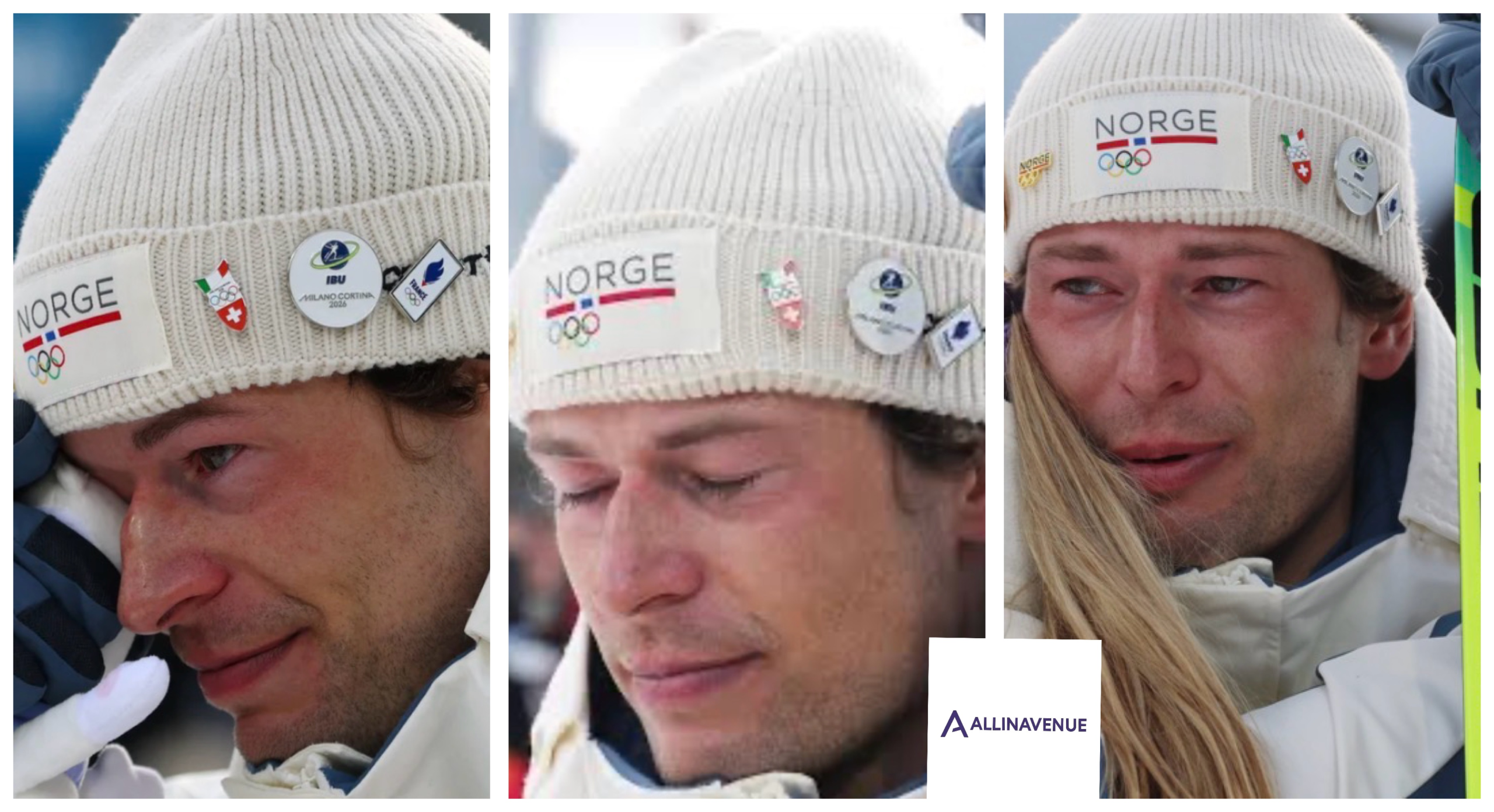
Norwegian biathlete Sturla Holm Lægreid stood on the Olympic podium with a bronze medal around his neck. The snow glittered. The cameras flashed. It should have been a moment of pure triumph.
Instead, he was fighting back tears.

After finishing third in the men’s 20km biathlon at the 2026 Milano Cortina Winter Olympics, Lægreid stunned viewers with a confession no one saw coming.
This wasn’t about missed shots or narrow margins. It was about love, regret, and a mistake he says has haunted him for months.
‘There is something I want to share with someone who may not be watching today,’ he said on live Norwegian television, his voice heavy with emotion. ‘Half a year ago, I met the love of my life.

The world’s most beautiful and kindest person. Three months ago, I made the biggest mistake of my life. I cheated on her. I told her a week ago. This has been the worst week of my life.’
The bronze medal in his hands felt lighter than the weight in his chest.
‘I had the gold medal in life,’ he continued. ‘Sport has come second these last few days. I only have eyes for her. I wish I could share this with her.’
While the world saw an elite athlete delivering under Olympic pressure, Lægreid says he was barely holding himself together.

Asked how he managed to compete amid such emotional turmoil, he admitted he leaned on a motivational video from his home club and a desire to take responsibility.
‘I try to be a good role model, and I did something stupid,’ he said. ‘You have to admit when you do something you can’t stand for. When you hurt someone you love so much.’
He chose not to name his girlfriend, explaining she had already endured enough in the past week. ‘I hope there is light at the end of the tunnel for us both,’ he said softly. ‘And that she can continue to love me.’
Lægreid, who won Olympic relay gold in Beijing in 2022 and has 14 world championship medals, is no stranger to standing on podiums. But this one felt different. Later, he even questioned whether he should have spoken publicly at all.
‘I hope I didn’t ruin Johan’s day,’ he said, referring to teammate Johan-Olav Botn, who took gold in the event. ‘Maybe it was selfish of me to give that interview. I don’t want to steal the show. You’re an Olympic gold medallist forever. I don’t want this to overshadow that.’

Still, he admitted his motivation was simple and painfully human.
‘Maybe there’s a chance she will see what she really means to me. Maybe not. But I don’t want to think I didn’t try everything to get her back.’
The race itself was already charged with emotion. As Botn crossed the finish line to claim gold, he shouted the name of their late teammate, Sivert Guttorm Bakken, who was found dead in an Italian hotel room last December.
‘We did it, Sivert!’ Botn cried, pointing to the sky.
At the press conference, Lægreid echoed the tribute. ‘We were five guys on the start line, and one of them was watching from above. This was for Sivert, really.’
So while medals were handed out and flags were raised, this Olympic moment became something more than a sporting result. It became a story of grief, guilt, love, and vulnerability.
On a day meant to celebrate victory, Sturla Holm Lægreid reminded the world that even champions carry fragile hearts beneath their racing suits.