Modern life depends heavily on the internet. We use it to pay for shopping, access banking services, book tickets, communicate with friends and family, and keep up with the latest news.
But have you ever wondered what would happen if the internet suddenly stopped working for several hours, or even several days?
Emergency preparedness experts are warning that people should think beyond stocking up on food and drinking water.
They also recommend having alternative ways to communicate, access important information, and manage everyday tasks without relying on the internet or mobile networks, according to The Independent.
Until recently, preparing for major emergencies was often associated with particularly cautious people or survival enthusiasts. Today, however, emergency planning is increasingly becoming part of official government advice.
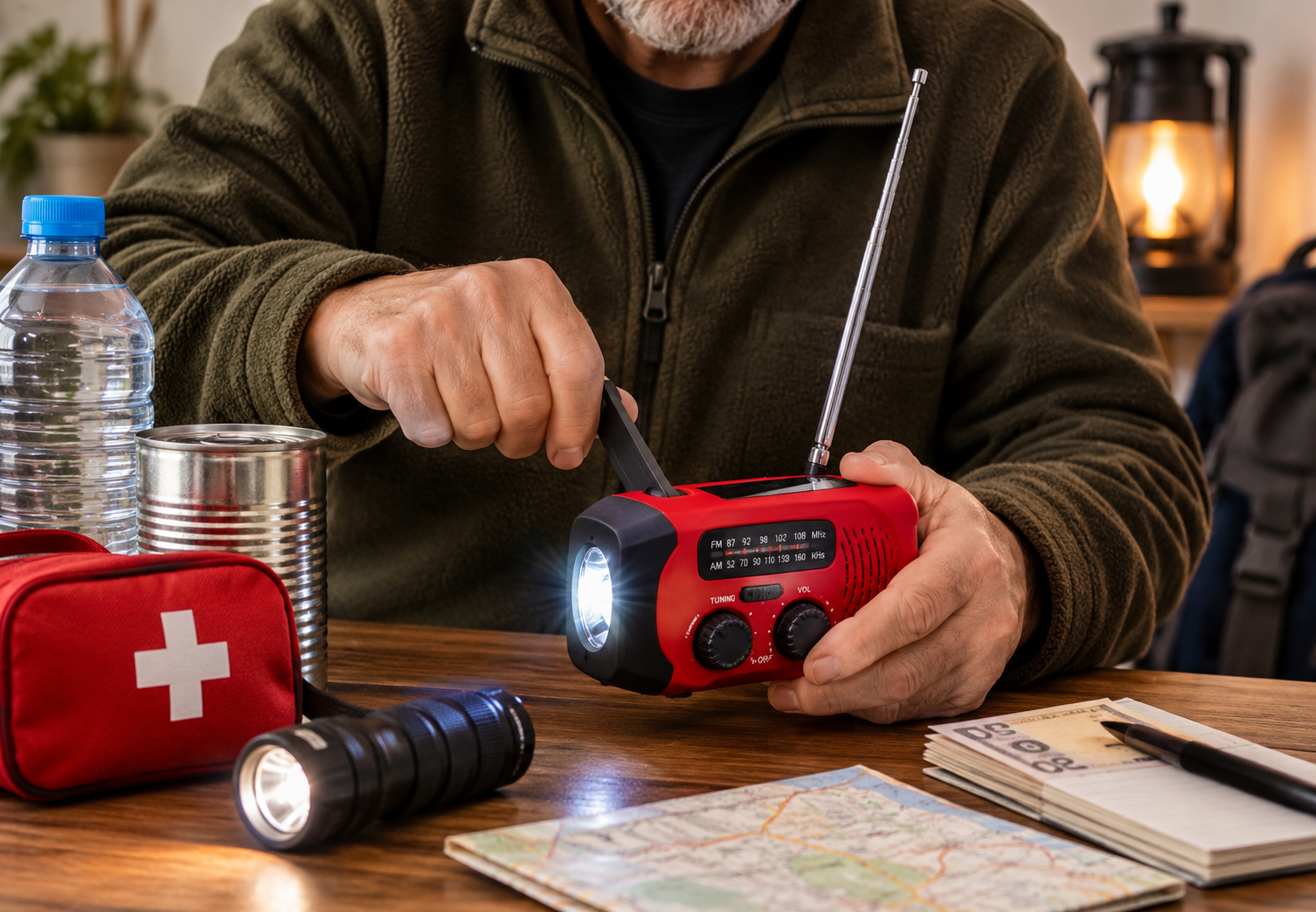
Authorities in the United Kingdom have encouraged households to keep essential supplies, including canned food, bottled water, flashlights, and battery-powered or hand-crank radios.
Danny, founder of Start Prepping UK, believes that the internet is far more vulnerable than many people realize.
Its operation depends on electricity, cables, communication networks, and numerous other infrastructure systems. A failure in just one important part of this chain could leave people without access to online services.

Interest in communication devices that work independently of the internet has already increased significantly. Jack Brown, co-owner of Sgt Prepper’s Shop, revealed that more than 80% of orders placed during the week following the government’s preparedness recommendations included radios.
Your Smart Home Could Become Completely Useless
Experts are also encouraging homeowners to reconsider how dependent their everyday appliances have become on digital technology.
Smart locks, lighting systems without traditional switches, video doorbells, and internet-connected heating controls may all become difficult or impossible to operate during a major outage. People who unlock their cars using smartphones are also advised to keep a physical backup key or access card somewhere safe.
“The more devices you have connected to the internet at home, the more potential entry points there are for hackers. But regardless of the technology you use, you need to be prepared for the worst-case scenario,” Brown explained.
Danny shares a similar opinion. He recommends avoiding unnecessary dependence on internet-connected appliances whenever possible.
Even when purchasing something as ordinary as an electric toothbrush with Wi-Fi capabilities, consumers should consider what would happen if the internet or electricity suddenly became unavailable.
Darren Rhodes, founder of UK Prepper Hub, believes that every modern device should have an alternative that does not depend on digital technology.
His own household is equipped with a diesel heater, solar panels, and a portable Jackery power station. These solutions can provide a degree of independence during emergencies, although such equipment can cost anywhere from several hundred to several thousand pounds.
Cash and Paper Maps Could Become Essential Again
One of the simplest ways to prepare for a digital blackout is to keep enough cash at home to cover several days of essential expenses. Experts recommend having smaller banknotes and coins rather than relying entirely on large bills.
Online banking services can become particularly vulnerable during widespread technical problems. A recent outage lasting approximately ten hours disrupted Revolut’s services, leaving some customers unable to make payments for their purchases.
Brown recommends maintaining accounts with at least two or three different banks. If one institution experiences a cyberattack or technical failure, customers may still be able to access their money through another provider.

It is also worth keeping written copies of important banking information, emergency telephone numbers, and insurance policy details in a secure location.
Drivers should consider keeping a traditional paper road map in their vehicles instead of relying exclusively on navigation applications. At home, a notebook containing important notes, first-aid instructions, repair guides, appliance manuals, and copies of essential documents could prove extremely useful.
Danny has taken his preparations even further by downloading an offline version of Wikipedia onto a hard drive. This allows him to access a huge amount of reference information even if the internet becomes completely unavailable.
Radio Communication Could Replace Smartphones
Some preparedness enthusiasts are exploring more advanced communication technologies that do not require traditional internet or mobile networks.
One example is LoRa, short for Long Range. This wireless technology uses radio signals to transmit small amounts of information over considerable distances. It can be used for sending short text messages without Wi-Fi, a mobile network, or a SIM card.
With suitable devices and software, users can establish a network consisting of multiple interconnected nodes. Each device can help relay messages to another, creating alternative communication routes. This means that communication may continue even if one node stops working, provided another route is available.
Experts also recommend learning about amateur radio and CB radio systems, which can offer additional communication options during emergencies.
Rhodes, who lives in a rural area where power cuts are relatively common, has even given walkie-talkies to several elderly neighbors. His goal is to make sure they can contact him if an emergency occurs and ordinary communication services become unavailable.
Why Your Neighbors Could Be Your Most Valuable Resource
There is a common stereotype that people who prepare for disasters are isolated survivalists who hide underground shelters filled with supplies and are willing to defend them at any cost.
However, experts argue that cooperation and community support are among the most important elements of emergency preparedness.

“A united community is much more resilient. Everyone has skills that others may not have, which means people can help one another,” Rhodes explained.
Danny also recommends getting to know your neighbors before an emergency happens and building friendly relationships within the local community.
According to him, after major disasters, people frequently organize themselves into informal support groups, sharing resources, information, and practical skills.
If a large-scale cyberattack were to disrupt internet access and card payments, local communities might need to find their own ways of supporting residents and meeting essential needs.
In such circumstances, knowing who has medical knowledge, who can repair equipment, who owns a generator, or who can help elderly residents could make a significant difference.
Preparing Today Could Make Tomorrow Easier
Experts agree that people do not need to wait for a disaster to start thinking about life without digital technology.
The best approach is to gradually develop alternatives to the services and devices used every day. Keeping some cash, having access to offline information, maintaining backup communication devices, and storing important documents on paper are relatively simple steps that can make a household more resilient.
The internet has transformed modern life, but its convenience can also make people forget how dependent they have become on it.
A few hours without a connection might be frustrating. Several days without electricity, mobile networks, online banking, or digital payment systems could be much more challenging.
Being prepared does not mean expecting the worst every day. It simply means knowing how to manage when the technology everyone takes for granted is no longer available.
You may also like this 👀👇📚
Leave a Reply