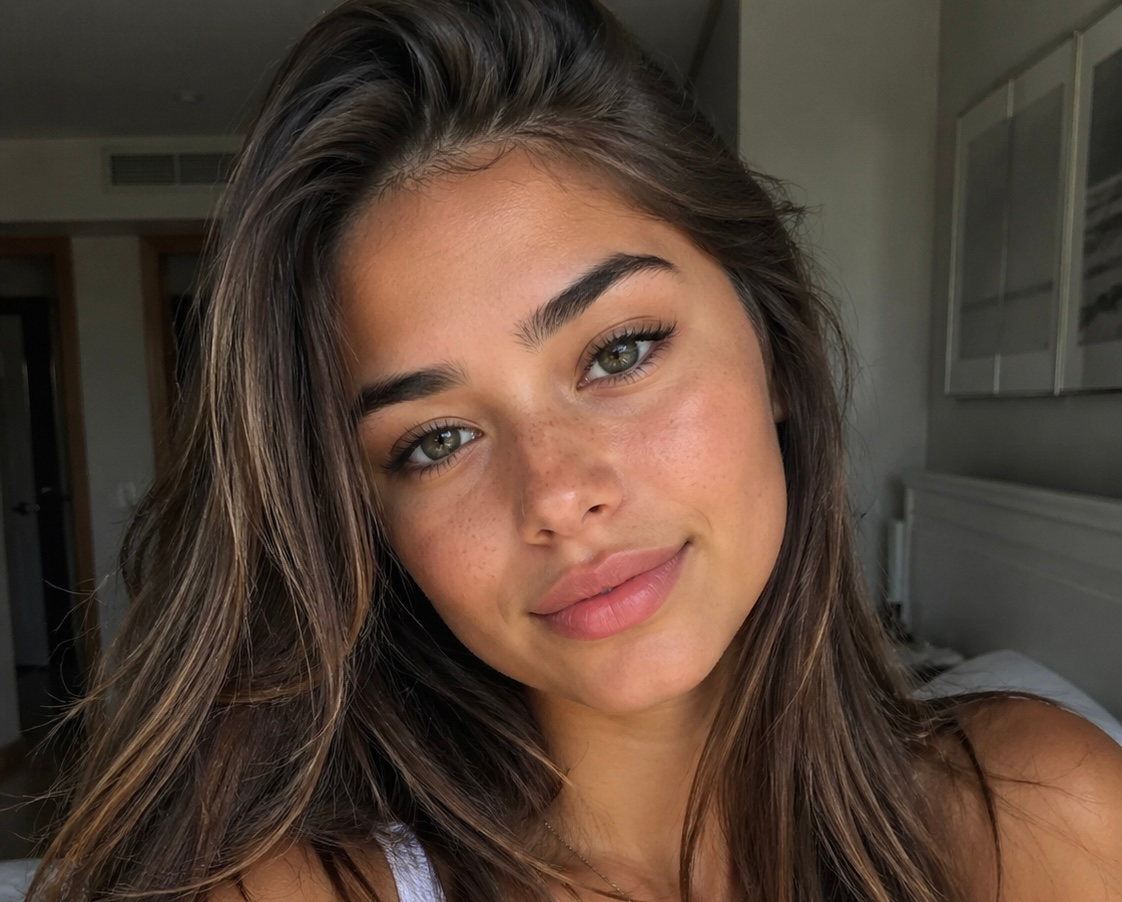
Social media is overflowing with images of “perfect” women who appear glamorous, patriotic, stylish, and seemingly real. These profiles attract millions of views, thousands of comments, and loyal followers. But in many cases, there is one shocking truth: the person does not actually exist.
One of the most striking examples is Emily Hart, a viral MAGA-style influencer who gained massive attention online through provocative photos and patriotic content. Later, reports revealed that her image was entirely generated by artificial intelligence and managed by an individual based in India. According to investigations, the project even generated enough income to help fund its creator’s medical school education.
Emily Hart is far from an isolated case.

“Beautiful Women Without a Pulse”
The rise of AI-generated influencers is accelerating rapidly across platforms like Instagram, TikTok, and X. Some virtual personalities openly identify themselves as artificial, while others are designed to appear completely human.
One such example is Ana Zelu, an AI influencer with the polished appearance of a luxury lifestyle celebrity. Her social media feed features glamorous tennis tournaments, coffee in European palaces, strolls across the Brooklyn Bridge, and designer fashion shoots.

Despite openly labeling herself as an “AI influencer,” Ana has attracted more than 300,000 followers, many of whom respond emotionally as if she were real.
Comments often include:
- “You are unmatched.”
- “God bless your beauty.”
- “You’re truly special.”
The Illusion Feels Real
Another major virtual star is Mila Sofia, a digital pop icon with nearly 600,000 followers. She appears to sing, dance, model luxury outfits, and share intimate lifestyle moments, despite none of it involving a real human being.
Her followers regularly post deeply personal messages such as:
- “I love you.”
- “You look like an angel.”
- “My sweet love.”
Psychotherapist Jonathan Alpert explains that emotional attachment does not require authenticity.
“People don’t need something to be real. They need it to resonate.”
If an account appears attractive, engaging, and emotionally responsive, the brain may interpret it as meaningful social connection.

The Loneliness Epidemic
Experts warn that the growing popularity of AI influencers reflects a broader social crisis: widespread loneliness.
Forensic psychologist Carole Lieberman suggests many users feel safer engaging with artificial personalities than navigating the unpredictability of real relationships.
AI influencers offer:
- No rejection
- No emotional risk
- Constant accessibility
- Personalized fantasy
For many, even artificial companionship feels better than isolation.
Why This Trend Is Dangerous
The most concerning issue is that increasingly sophisticated AI content is becoming nearly impossible to distinguish from reality.
Digital forensics expert Dr. Hany Farid warns that many synthetic profiles do not disclose their artificial nature, making deception easier than ever.
Modern AI-generated:
- Photos
- Videos
- Voices
- Personalities
have advanced so significantly that average users often cannot reliably tell whether they are interacting with a real person.

A New Era of Digital Fame
AI influencers are no longer niche experiments. They are becoming mainstream tools for:
- Political messaging
- Marketing campaigns
- Adult content monetization
- Brand partnerships
- Audience manipulation
Some fully artificial accounts have even posted staged images with politicians, military figures, and luxury brands, blurring the line between reality and fabrication.
Final Thoughts
As artificial intelligence continues reshaping social media, users face a new challenge: learning to separate genuine human interaction from carefully engineered digital illusion.
The future of online influence may no longer belong to real people at all.
And for millions scrolling every day, the difference may already be impossible to detect.