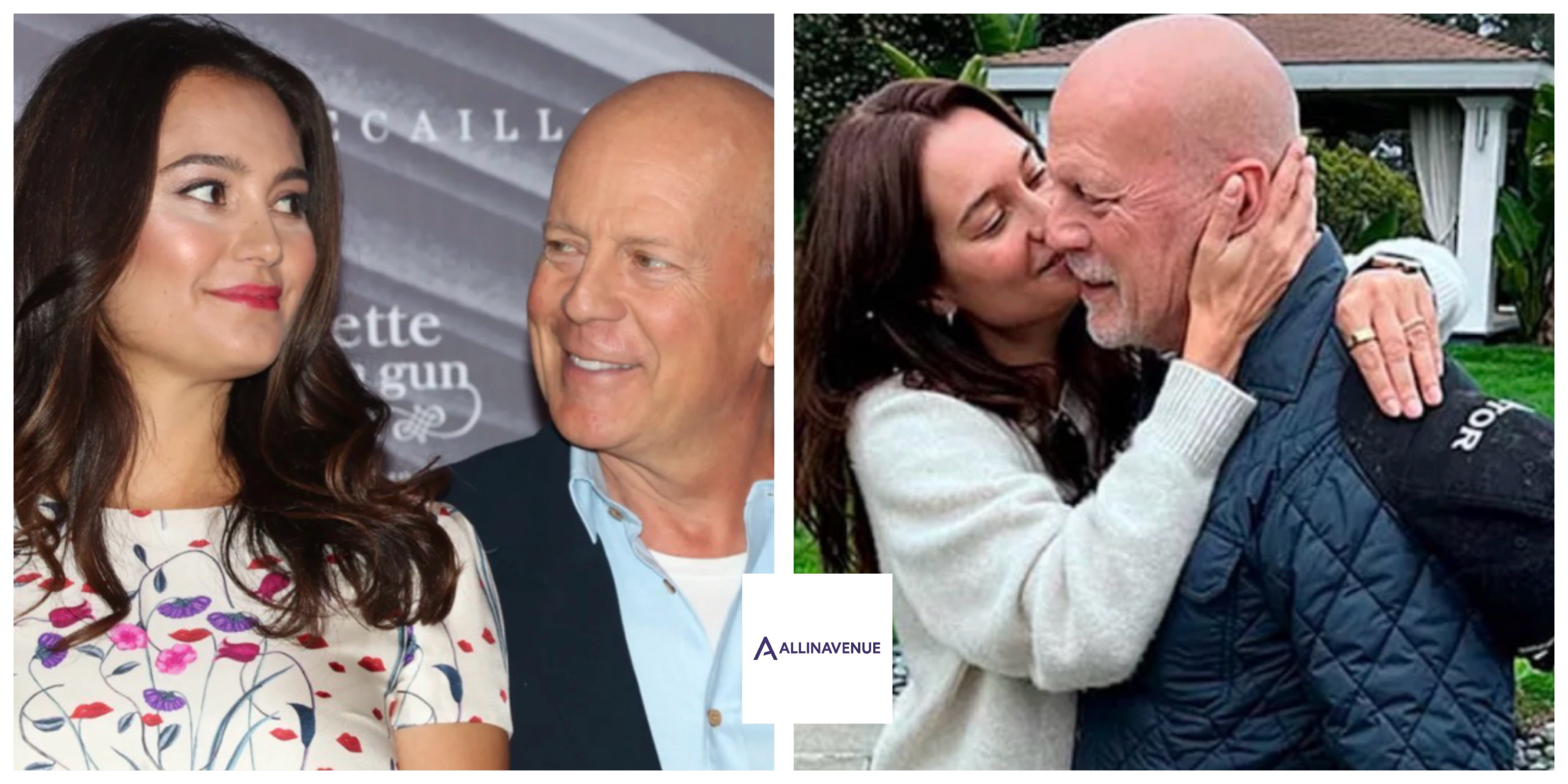
Bruce Willis’ diagnosis marked one of those rare moments when celebrity news stopped feeling distant and suddenly felt personal. When the beloved action star stepped away from Hollywood, fans around the world felt the weight of it alongside his family.
Now, years after the first announcement, his wife Emma Heming Willis is once again opening a window into their reality and her words are both tender and surprising.

Back in 2022, the Willis family shared that Bruce had been diagnosed with aphasia, a condition that affects speech and communication. Not long after, doctors identified the underlying cause as frontotemporal dementia, also known as FTD.
According to the Mayo Clinic, FTD refers to a group of brain disorders that primarily affect the frontal and temporal lobes, areas responsible for personality, behavior, and language.
Unlike Alzheimer’s disease, which often begins with memory loss, FTD tends to strike earlier in life and shows itself first through changes in communication and behavior. Bruce Willis was 67 when his diagnosis became public.

Emma, who has been candid about the emotional complexity of their journey, recently spoke on The Unexpected Journey podcast with Cameron Oaks Rogers. During the conversation, she shared a detail that many listeners did not expect: Bruce is not aware that he has dementia.
In her words, he has “never connected the dots.” While that reality comes with its own heartbreak, Emma described it as both a blessing and a curse. She admitted that, in some ways, she feels grateful that he does not fully understand what is happening to him.
‘I’m really happy that he doesn’t know about it,’ she explained.

When asked whether Bruce still recognizes her during moments of clarity, Emma responded with quiet confidence. Yes, he does. She emphasized that FTD is not Alzheimer’s, and recognition is not typically lost in the early stages.
“‘He’s still very much present,’ she said, adding that the progression of his illness has been relatively slow. Instead of fighting against the changes, the family has learned to move alongside them, adjusting their lives as Bruce’s needs evolve.

Emma also spoke about connection. While it may not look the same as it once did, it hasn’t disappeared.
‘He has a way of connecting with me and with our children,’ she shared. ‘It’s not how you might connect with your loved one, but it’s still incredibly meaningful. It’s just different.’
Her message was clear: love does not vanish with diagnosis. It reshapes itself. And for the Willis family, adaptation has become an act of devotion, one day at a time.