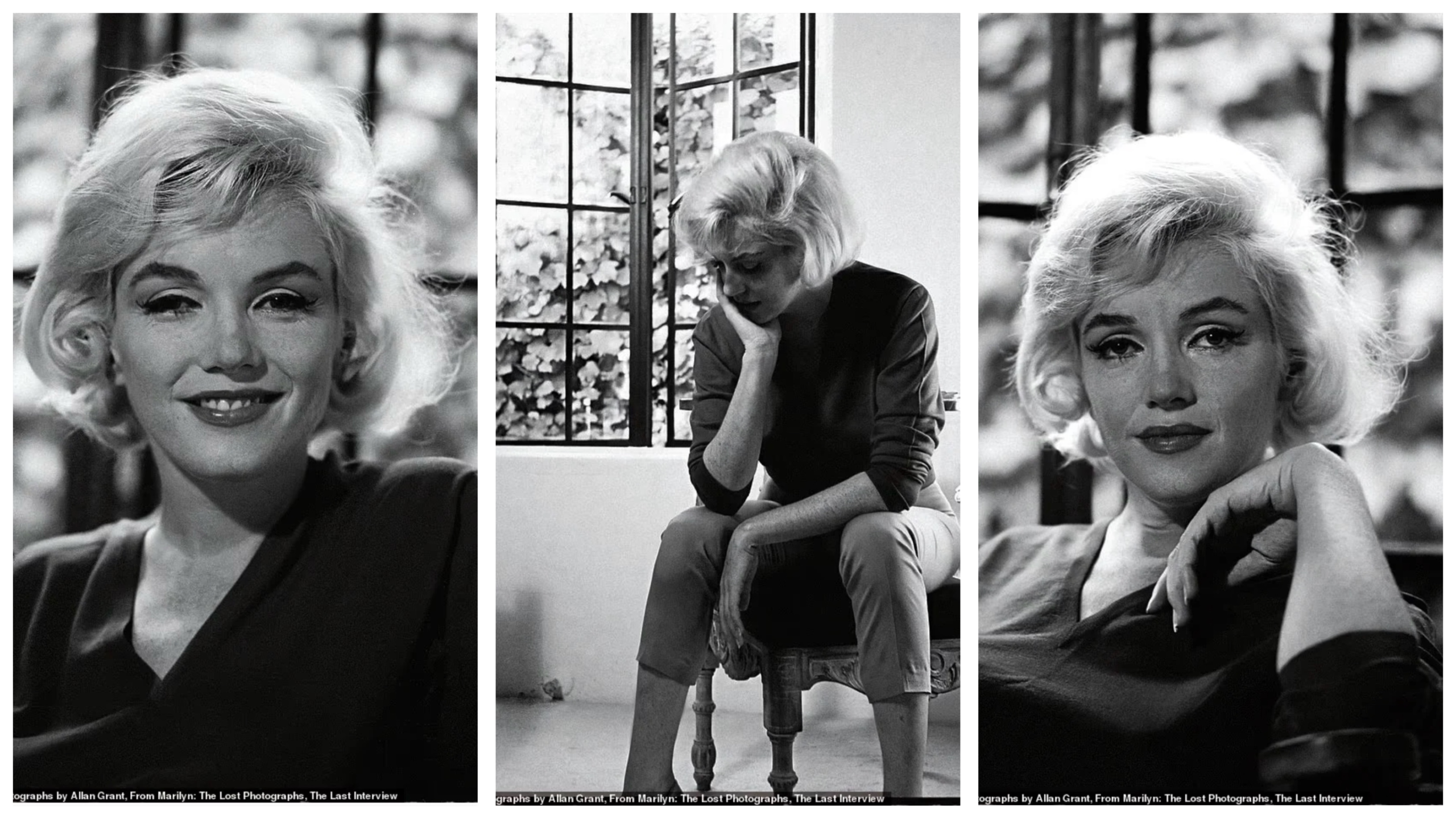
In August 1962, LIFE magazine published what would become Marilyn Monroe’s final interview, just two days before her tragic death. But behind that famous publication was a far larger and more emotional archive that remained hidden from the public for decades.
Captured in June 1962, only three months before Monroe passed away at age 36, photographer Allan Grant took 432 deeply personal photographs while journalist Richard Meryman recorded over four hours of intimate conversation with the Hollywood icon.

The session took place in Monroe’s newly purchased home in Brentwood, offering a rare glimpse into a side of her rarely seen by the public. Unlike glamorous studio portraits, these images captured Marilyn in a quieter, more vulnerable atmosphere.
For years, most of these photos and recordings remained unseen.

During the interview, Monroe opened up extensively about her childhood, recalling long walks to school, bike rides, and the growing awareness of how others noticed her beauty. She described moments of freedom, laughter, and youth with surprising warmth, while also revealing how early attention gradually shaped her identity in ways that felt isolating.
As her fame grew, Monroe explained that she increasingly felt transformed from a real person into a carefully constructed public image.

One of the interview’s most unforgettable moments came when Monroe discussed being labeled a “sex symbol.”
“I never understood what it meant to be a sex symbol. I thought it meant something like symbols on buildings.”
She added a haunting statement:
“I don’t want to be something.”
These words reflected not a rejection of femininity, but frustration with how the entertainment industry reduced her humanity.
Monroe also addressed her early nude photo shoot, which she had done simply to pay rent during financial hardship. She was paid just $50, unaware of how profoundly those images would later shape public perception.

Despite the heavy themes, the final portions of the interview revealed a woman seeking peace. Monroe spoke thoughtfully about fame as something unstable and external, emphasizing that meaningful work, creativity, and trusted relationships mattered far more to her than celebrity status.
Her words painted a portrait of someone who wanted not merely to be an icon, but to be respected as a serious actress and complete human being.
Today, this remarkable archive stands as far more than historical documentation. It offers a rare and heartbreaking window into the real Marilyn Monroe: thoughtful, fragile, intelligent, and deeply human beneath the polished Hollywood legend.

Her final photographs and recorded words remain one of the most moving glimpses ever captured of the woman behind the myth.