When the Artemis II mission crew—Reid Wiseman, Victor Glover, Christina Koch, and Jeremy Hansen—heads toward the Moon, they won’t just face scientific challenges. Daily life in space becomes a completely different reality.
Everyday Life in Zero Gravity
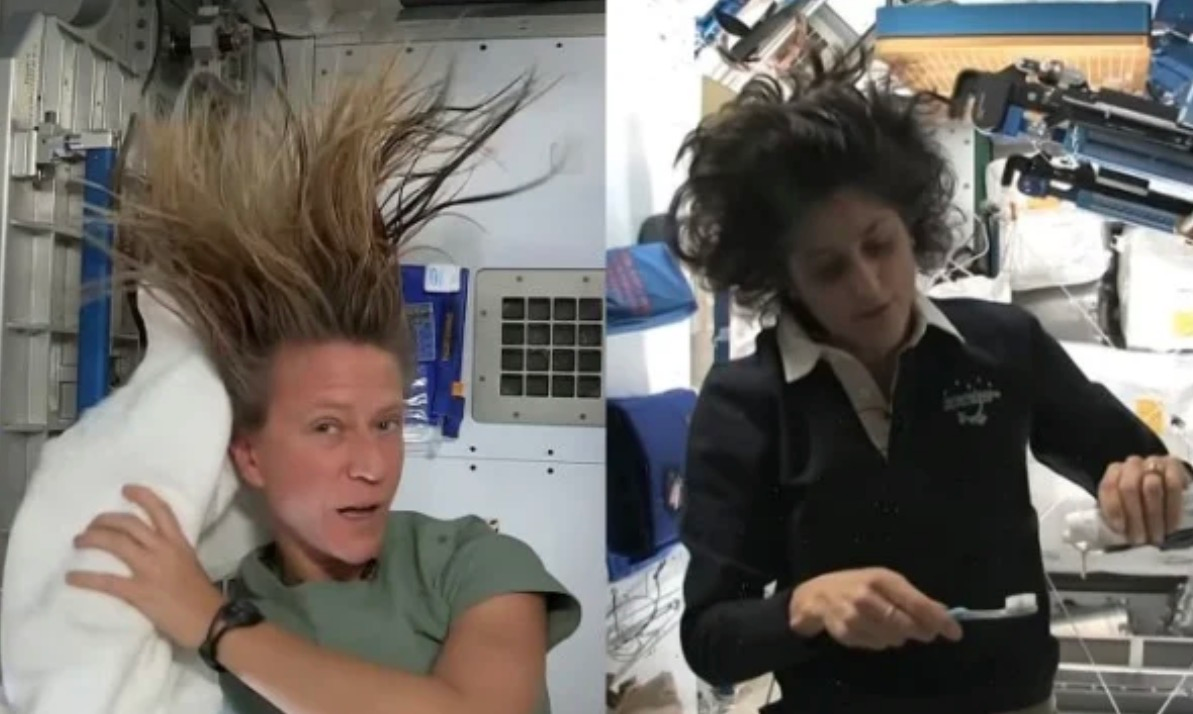
Living in zero gravity rewrites the rules of normal life. Water doesn’t flow—it forms floating, sticky bubbles that drift like tiny planets. Even hair refuses to behave, rising and floating freely in all directions.
Powder-based products are avoided because loose particles could damage equipment or be inhaled. Instead, astronauts use cream-based hygiene products. With limited water onboard, daily routines are simplified to the essentials.

Astronaut Kellie Gerardi explained that every crew member receives a personalized hygiene kit. They can even choose their favorite toothpaste. Full makeup is rare, but astronauts still bring small items that help them feel comfortable and confident.
Hair, Skin, and Makeup in Space
Washing hair in space takes about 20–25 minutes. It’s done using special bags and no-rinse shampoo. For longer missions, shaving is limited to razors and unscented creams.
Long hair is often left loose to improve airflow and prevent bacteria buildup.
Astronaut Sunita Williams, who spent 288 days in space, became famous for her long floating hair. After returning to Earth, her hair had turned completely gray—likely due to stress and hormonal changes affecting pigmentation.

Skin care is just as important. European astronaut Samantha Cristoforetti demonstrated how astronauts wash using special soap packets. Water clings to the skin due to surface tension, then is wiped away with a towel and dried near ventilation systems.
As for cosmetics, astronaut Serena Auñón-Chancellor shared that while she brings eyeliner and eyebrow pencils, using them in space often feels like more effort than it’s worth.
Astronauts brush their teeth by either swallowing toothpaste or spitting into a towel. Even nail trimming requires caution—clippings are vacuumed to prevent them from floating around the spacecraft.
The Evolution of Women’s Hygiene in Space
Since Valentina Tereshkova made history in 1963, space agencies have significantly improved how they support women in orbit.

In 1978, NASA introduced personal hygiene and makeup kits for female astronauts, including mascara and lipstick.
Sally Ride later described how early missions required creative solutions for feminine hygiene products and skincare—areas that were initially designed with only men in mind.
Beauty and Comfort Beyond Earth
Despite all the limitations, astronauts find ways to stay clean, comfortable, and confident in orbit. Life in zero gravity may look surreal, but it proves one thing:
Even in space, self-care still matters.