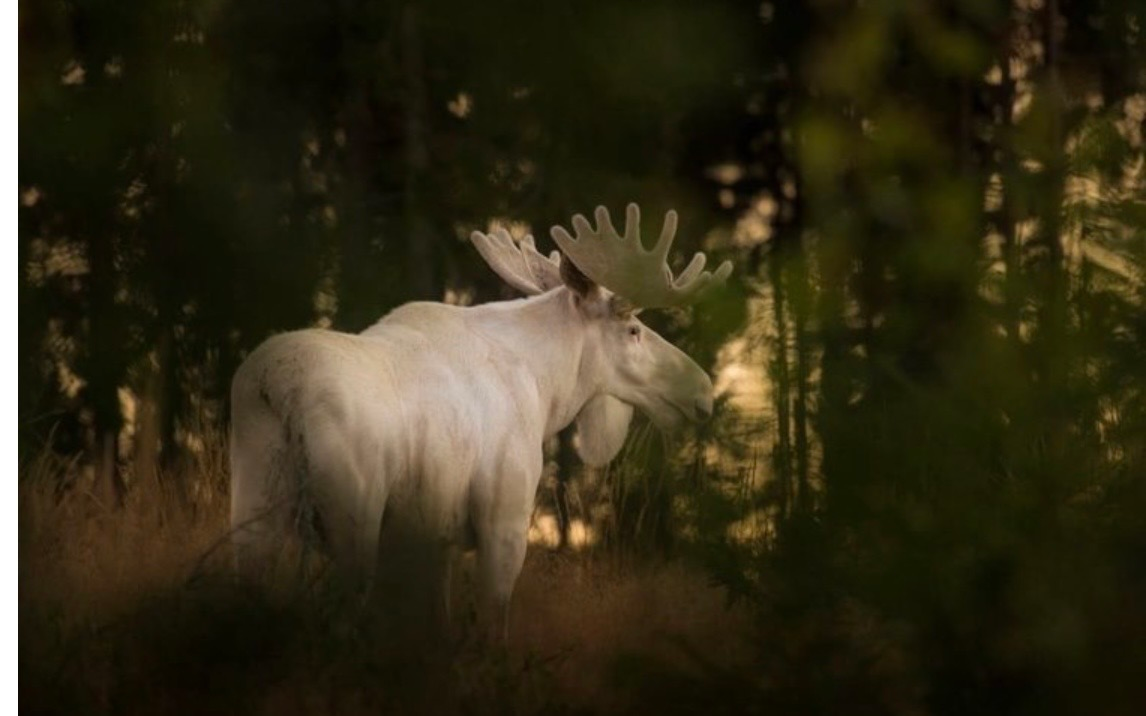
Nature has a remarkable way of reminding us that it still holds countless surprises. Just when we think we’ve seen every color, every pattern, and every extraordinary creature, something appears that feels almost mythical.
One such wonder is the incredibly rare white elk, an animal so breathtaking that many people mistake photographs of it for digital art or images created by artificial intelligence.
Yet these magnificent creatures are completely real, quietly roaming remote forests and capturing the imagination of everyone lucky enough to see them.
For wildlife photographers, spotting a white elk is the equivalent of discovering hidden treasure. Many spend years traveling across vast wilderness areas, enduring harsh weather, long hikes, and countless days without success, hoping for just a brief encounter.

The forests of Scandinavia and parts of Canada are among the few places where these extraordinary animals have been documented, making every sighting an unforgettable event.
Recently, one of these stunning white elk was spotted in Sweden near the border with Norway, delighting nature enthusiasts around the world.
The appearance of such an animal immediately sparked excitement online, with thousands of people sharing the incredible images.
Many viewers initially assumed the photographs had been edited because the animal’s brilliant white coat looked almost unreal against the deep green forests and misty landscapes. However, experts confirmed that the elk was entirely genuine.
Contrary to popular belief, these animals are not albinos. While albino animals completely lack melanin, resulting in white fur, pink skin, and red or pink eyes,
white elk usually have dark eyes, dark noses, and normally pigmented skin. Their unique appearance is caused by a rare genetic condition known as piebaldism.
Piebaldism affects the distribution of pigment-producing cells during development. Instead of coloring the entire coat, the pigment is absent in large areas, creating animals that appear almost completely white while retaining their normal eye and skin color.
This genetic condition is exceptionally rare, making every white elk an extraordinary sight. Their distinctive coloring has turned them into symbols of mystery and wonder throughout Scandinavian folklore.
Of course, being so visually striking comes with challenges. A bright white coat makes it much harder for an elk to blend into its surroundings. In areas with many predators, this lack of camouflage can reduce an animal’s chances of survival.

Fortunately, in parts of Sweden where predator populations have declined over time, white elk have been able to survive more successfully, allowing a handful of these remarkable animals to reach adulthood.
One photographer who knows this feeling better than most is renowned wildlife photographer Roger Brendhagen. Known for his incredible patience and deep respect for wildlife, Brendhagen has dedicated years to documenting animals in their natural habitats
Capturing images of a white elk is often described as a once-in-a-lifetime achievement, and his stunning photographs have earned international recognition.
Behind every breathtaking wildlife photograph lies hours, days, or even weeks of waiting. Photographers often wake before sunrise, quietly positioning themselves in remote forests while hoping the animals appear naturally.
There are no guarantees. Sometimes they return home empty-handed after spending days in the wilderness. That uncertainty makes every successful encounter even more rewarding.
Imagine standing silently among towering pine trees as morning fog drifts across the forest floor. Suddenly, a magnificent white elk steps into view, moving gracefully through the landscape as if it belongs in a fantasy story.
The scene lasts only a few moments before the animal disappears back into the wilderness. For photographers fortunate enough to witness this spectacle, it’s an experience that remains unforgettable for the rest of their lives.
In recent years, only a small number of white elk have been officially documented in Sweden and Canada. Because they are so rare, each sighting attracts enormous attention from wildlife lovers, conservationists, and photographers alike.

Fortunately, strict wildlife protection measures and responsible photography practices help ensure these animals are not disturbed in their natural environment.
Experts also note that healthy elk populations have been increasing in several regions where habitat conditions remain favorable. While predator numbers vary depending on the location, conservation efforts continue to play an important role in maintaining balanced ecosystems where these majestic animals can thrive.
The story of the white elk serves as a powerful reminder of just how astonishing the natural world truly is. Hidden within forests across the globe are creatures that seem almost too beautiful to be real, waiting to surprise anyone fortunate enough to cross their path.
Nature’s greatest masterpieces are not painted on canvas but wander silently through ancient forests, reminding us that countless wonders still exist beyond our everyday lives.
Our responsibility is simple but vital: to protect these wild places, preserve biodiversity, and ensure future generations can continue to marvel at extraordinary animals like the rare white elk.
Every protected forest, every conservation effort, and every respectful encounter helps keep these magical creatures a living part of our world rather than just a story from the past.