How Flowers Became a Powerful Tool in Global Diplomacy
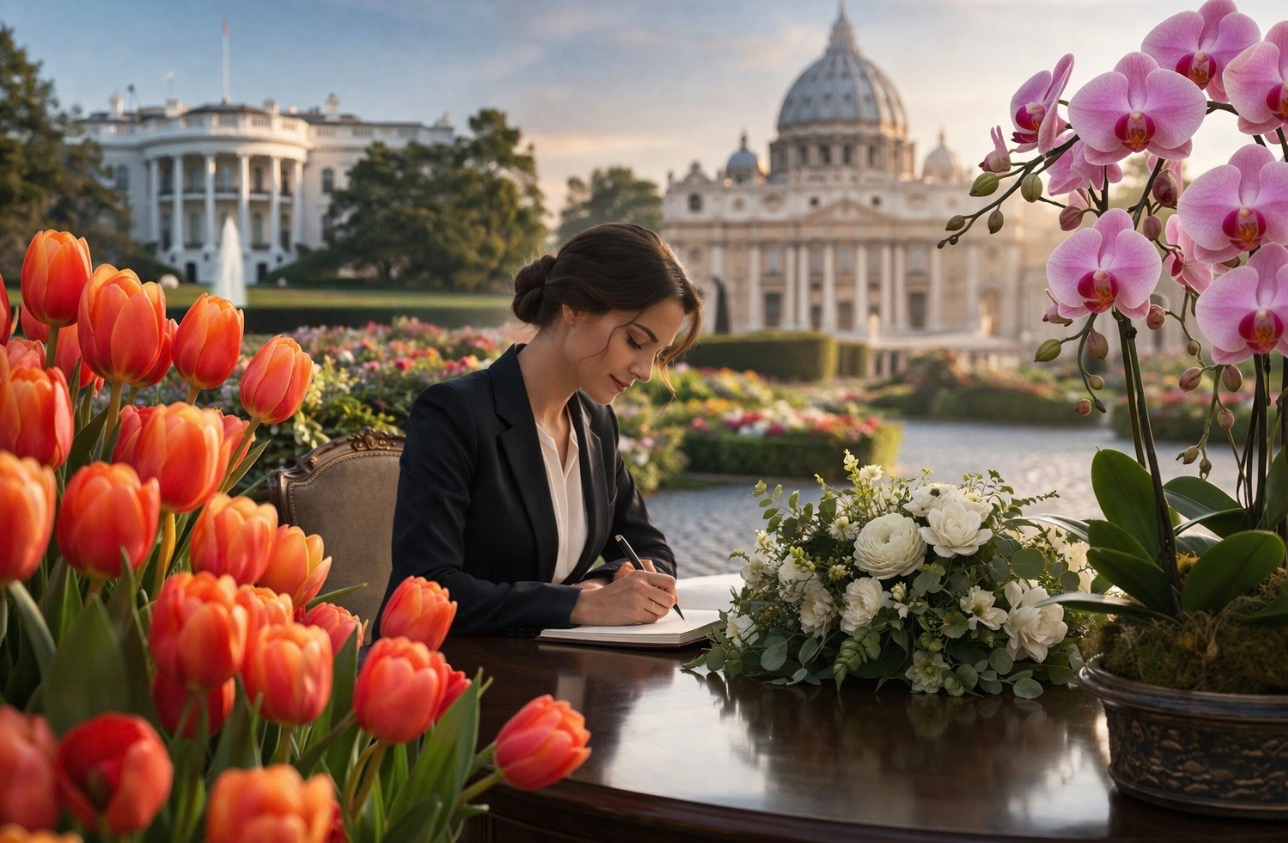
Every Easter, the Vatican is transformed into a breathtaking sea of floral arrangements, while the tulips blooming in the gardens of the White House arrive straight from the Netherlands.
But these flowers are far more than decoration. Across the world, they have quietly become tools of diplomacy, shaping the atmosphere of high-level meetings, state visits, and even peace negotiations.

A Silent Language Older Than Politics
The relationship between flowers and power stretches back thousands of years. In ancient Egypt, lotus flowers adorned temples and pyramids, symbolizing rebirth and eternity. Meanwhile, in Greece and Rome, olive branches and floral wreaths stood for peace and divine favor.
Today, that emotional power still lingers. The right floral arrangement can soften tense negotiations, create a sense of ceremony, and even serve as part of a country’s “soft power.”
As public diplomacy expert Nicholas Cull explains,
“It’s impossible to imagine a political summit without flowers. Their freshness and fleeting nature inspire trust and goodwill.”

When Flowers Can Spark Tension
Yet, in diplomacy, even beauty requires precision.
During the Northern Ireland peace talks in the 1990s, flower choices had to be handled carefully. Lilies were associated with Catholic republicans, while roses symbolized Protestant communities. A simple bouquet could unintentionally send the wrong message.
On the other hand, some floral symbols transcend politics. In Belgium and France, poppy fields remain sacred reminders of the fallen soldiers of World War I, commanding deep respect.

Tulips: The Global Symbol of Hope
Although not officially the national flower of the Netherlands, tulips are inseparable from its identity.
In March 2026, Dutch growers gifted 150,000 tulip bulbs to the United States to mark the 250th anniversary of American independence. According to the Royal Anthos association, tulips symbolize hope and patience: a quiet reminder that meaningful things take time to bloom.
Their history is just as fascinating. The 1630s saw the famous “Tulip Mania,” one of the world’s first economic bubbles, when tulip bulbs were worth as much as houses in Amsterdam.

Flowers as Diplomatic Gifts Around the World
Countries continue to use flowers as subtle diplomatic tools:
- In Liechtenstein, edelweiss bouquets are gifted to visiting delegations
- In Singapore, orchids are named after world leaders in its National Orchid Garden
- Notable figures honored include Joe Biden, Barack Obama, Nelson Mandela, and Margaret Thatcher
Even royalty participates in floral diplomacy. In 2023, Princess Amalia of the Netherlands gifted a tulip garden to Madrid as a gesture of gratitude following her stay in Spain.
More Than Just Beauty
In a world driven by power and negotiation, flowers offer something rare: emotion without words.
They can calm tensions, honor history, and build bridges between nations. Their beauty may be temporary, but their message can last far longer.