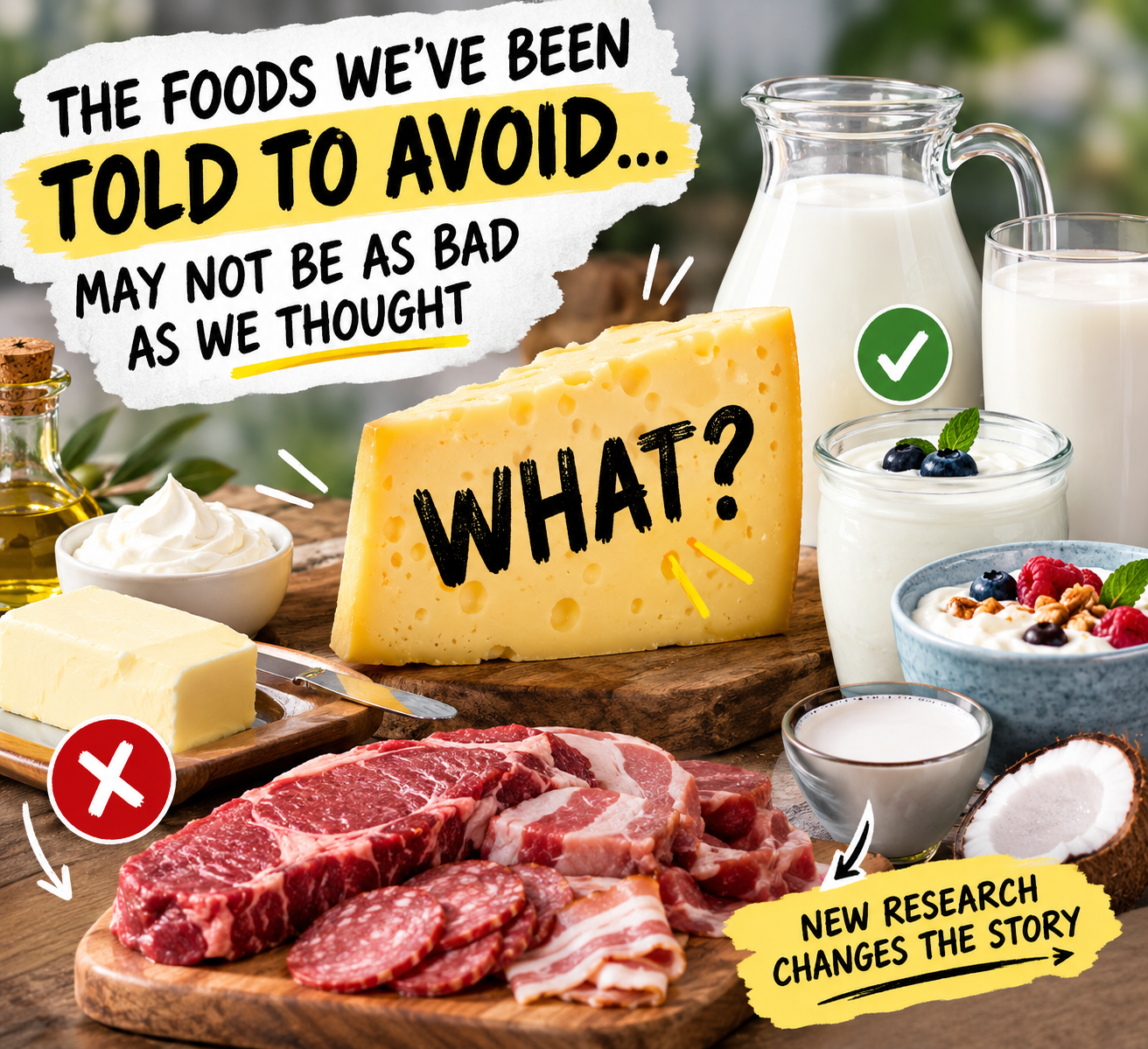
For years, we have been told that fatty foods are bad for us. We were encouraged to replace whole milk with skimmed milk, swap butter for spreads, and limit the amount of cheese we eat as much as possible. But new research suggests that the picture may be more complicated than that.
A study published in a nutrition journal found that consuming three servings of full-fat dairy products a day did not have a negative effect on body weight, metabolism, or blood fat levels.
According to nutritionist Rob Hobson, it is important to look beyond the amount of saturated fat in a food and consider the food as a whole. Protein, calcium, and the fermentation process can all influence how the body digests food and absorbs fat.
Cheese
One ounce, or about 30 grams, of cheese contains approximately 5 to 6 grams of saturated fat. However, research suggests that its effect on cholesterol may be less significant than its saturated-fat content alone would suggest.
Calcium and other components found in cheese may reduce the absorption of certain fatty acids in the digestive system. This means that the way saturated fat behaves in the body can depend on the overall structure of the food in which it is found.
If you have high cholesterol, it is still important to keep an eye on how much cheese you eat. However, most people do not necessarily need to eliminate cheese from their diet completely. A portion of around 30 grams is considered a reasonable serving size.

Full-Fat Yogurt
A 150-gram serving of full-fat yogurt contains approximately 5 grams of saturated fat, but its effect on cholesterol is considered relatively neutral.
Fermentation and the presence of live bacterial cultures may also have beneficial effects on gut health and metabolism. These properties make yogurt different from some other foods that contain similar amounts of saturated fat.
For the healthiest everyday option, experts recommend choosing plain, unsweetened yogurt. You can add fresh fruit, nuts, or seeds for extra flavor, fiber, vitamins, and healthy fats.
Whole Milk
Whole milk does not necessarily raise LDL, or “bad,” cholesterol more than skimmed milk. A 200-ml serving contains just under 5 grams of saturated fat, while the amounts of protein, calcium, iodine, and vitamin B12 are broadly comparable with lower-fat versions.
This means that choosing skimmed milk is not automatically necessary for everyone. For some people, whole milk can still be part of a balanced diet, particularly when consumed in reasonable portions.
Kefir
A 240-ml serving of full-fat kefir contains approximately 4.5 to 5 grams of saturated fat. Because kefir is fermented, the fermentation process may influence how the body absorbs its fats and proteins.
The live microorganisms found in kefir may also potentially reduce the absorption of cholesterol. However, researchers point out that there is not yet enough evidence to draw firm conclusions about these effects.
As with yogurt, plain and unsweetened kefir is generally the better choice, especially if you are trying to avoid unnecessary added sugar.

What Should You Limit?
Butter: One tablespoon of butter contains around 7.3 grams of saturated fat and relatively few other nutrients. For this reason, it is best used in small amounts, mainly for flavor, while olive oil can be chosen more often for cooking.
Cream: Cream contains highly concentrated amounts of fat and considerably less protein and calcium than many other dairy products. A small amount in a dessert or sauce is perfectly reasonable, but it does not need to become a major everyday source of calories or fat.
Coconut milk: Despite being plant-based, full-fat coconut milk can contain more than 13 grams of saturated fat per 100 ml. For regular consumption, lower-fat varieties may be a more suitable choice, particularly for people who are trying to reduce their saturated-fat intake.
Red meat: Fatty cuts such as ribeye steak and pork belly can significantly increase saturated-fat consumption. Processed meats, including bacon, sausages, and salami, have also been associated with an increased risk of colorectal cancer when consumed regularly.
At the same time, lean red meat remains a valuable source of protein, iron, zinc, and vitamin B12. British dietary guidelines recommend consuming no more than 70 grams of red and processed meat per day.

The Bigger Picture
The main message from scientists is that a food should not automatically be considered unhealthy simply because it contains saturated fat.
What matters is the complete nutritional composition of the food, how heavily it has been processed, the size of the portion, and how frequently it appears in your overall diet.
Rather than focusing on a single nutrient, such as saturated fat, nutrition experts increasingly emphasize the importance of looking at the entire food and the overall dietary pattern.
In other words, a small portion of cheese, full-fat yogurt, whole milk, or kefir does not necessarily need to be treated as a dietary villain. The bigger concern is often excessive consumption, particularly when high-fat foods are combined with large portions, added sugars, highly processed ingredients, or an otherwise unbalanced diet.
The goal is not necessarily to eliminate every source of saturated fat, but to understand where it comes from and how it fits into the rest of your diet. Balance, portion size, food quality, and variety may matter far more than simply labeling a food “fatty” or “healthy.”
You may also read this👀📚👇
Leave a Reply